
Current Research Projects
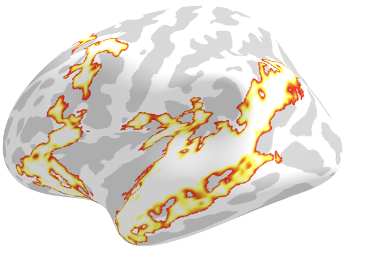
Do we implicitly perceive AI as possessing a mind?
I study how people perceive and interact with intelligent machines—whether a chatbot “feels” like it has a mind of its own, and how our brains process those interactions. Using a combination of brain imaging (fMRI), advanced analyses of language‐model activations, and conversation analysis, I compare what happens when someone thinks they’re talking to a human versus a computer. By uncovering the neural and computational signatures of mind attribution, this work sheds light on how people interact with AI systems, and how AI systems mimic (or fail to mimic) human interaction. In addition to contributing to cognitive science questions about perception of mind, one day this work may help us build AI systems that communicate more naturally--ultimately informing technology design that people can trust in social, educational, and healthcare settings.
Check out this presentation I gave that goes over the project and some preliminary results.
Interested in running a similar study? Checkout my fMRI experiment code or the fMRI analysis code.
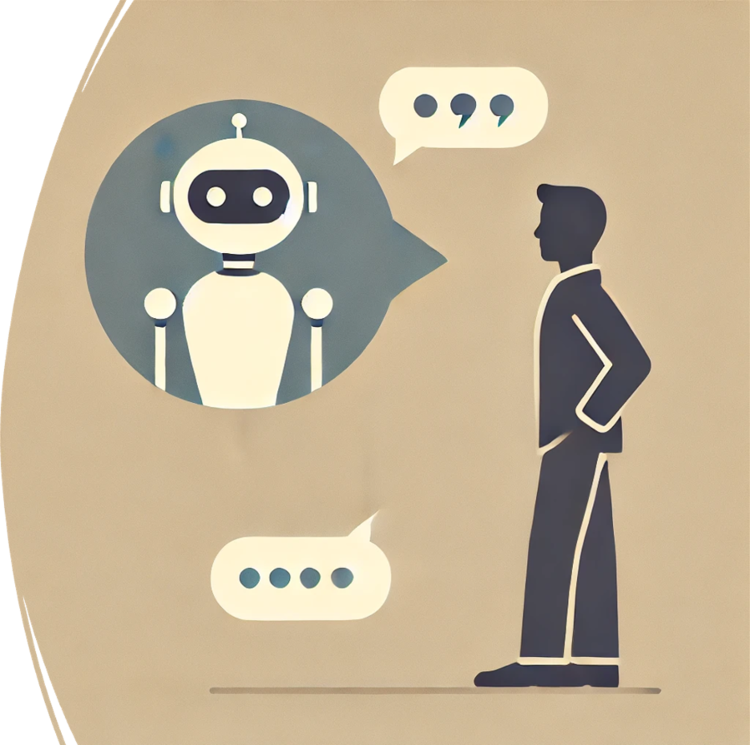
How information about mind shapes LLM behavior
As AI systems like ChatGPT become part of daily life, they often sound convincingly human. But how exactly are they adapting to their conversation partners, and how similar is this to how humans interact with others?
One way to look at this is by looking at LLM behavior: Do LLMs adapt their conversational style based on if they think they are talking to a human or another AI? How similar is this to how humans actually behave? Results suggest that LLMs do use distinguishable language when talking to humans and other AIs, but in different ways than humans do when performing a similar task.
In humans, it is thought that successful communication relies on complex models of another's mind (known in the psychology community as “theory of mind”). Humans use theory of mind to understand others intentions, beliefs, and feelings, allowing us to predict behavior and interact with others--like during a conversation. So, do current LLMs form rich representations (or models) of their partners' minds, like humans do? If so, how do these “mind models” change how they interact? One of the cool things about being a neuroscientist right now is that we can apply tools used in neuroscience to investigate the brain to understand the inner workings of LLMs. I’m working on a project that explores this question by combining behavioral analyses with neuroscience-inspired approaches (sometimes called mechanistic interpretability methods) to examine what AI “knows” about the mind. See a presentation from a recent talk I gave about this project with preliminary results here and the WIP code repository here.
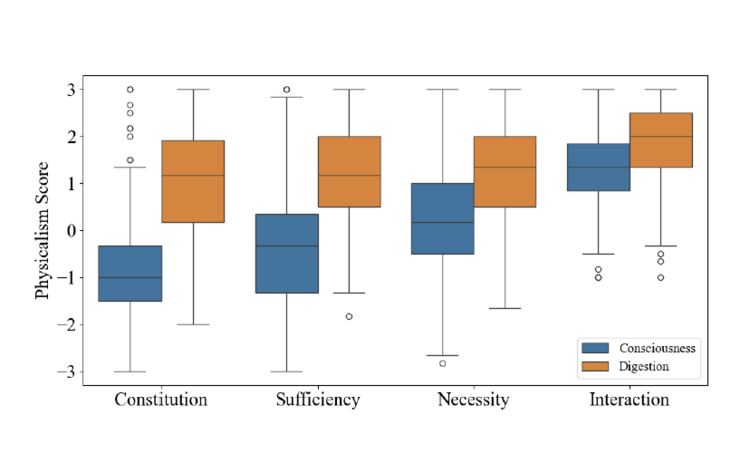
What do people believe about the physical nature of consciousness?
In this study, we asked people what they think consciousness is made of and whether it depends on the physical body. To better understand these beliefs, we compared answers about consciousness to answers about digestion—a clearly physical process. While most people agreed that digestion is physical, views on consciousness were more mixed. Some thought it needed the body to exist, while others thought it could exist without it. The strongest link we found was that people who believe in an immortal soul were more likely to say consciousness is not physical. These findings matter because beliefs about consciousness shape how people think about science, mental health, and even technology like AI. Understanding these beliefs helps us better understand how people think about the mind, and why they sometimes struggle to accept scientific explanations of it.
This study has been accepted to the Journal for Consciousness studies! Publication here.
For more information, see the pre-registration. here.
Click here the data analysis code.
Older Projects
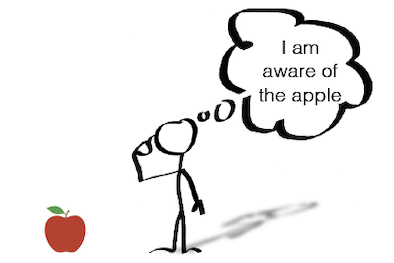
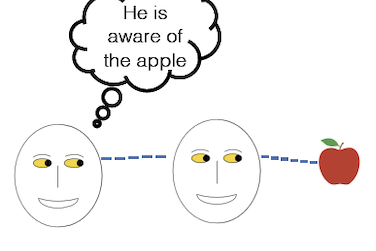
How thinking about others may shape what we see
What if the same brain system we use to understand other people’s minds also helps us become aware of the world around us? In this study, we explored the surprising possibility that social thinking—like judging what someone else might be aware of—relies on the same mental machinery we use to become aware of things ourselves. We found that people who were better at reading others’ awareness were also better at noticing faint visual stimuli, suggesting a shared cognitive link. However, thinking about others' awareness didn't directly influence their immediate ability to detect visual stimuli. These results suggest that social understanding and visual awareness might rely on common cognitive machinery, though exactly how they interact remains to be explored. This research adds to a growing theory that consciousness and social cognition are deeply intertwined—and that understanding others might be key to understanding ourselves.
See a poster that explains the experimental method here.
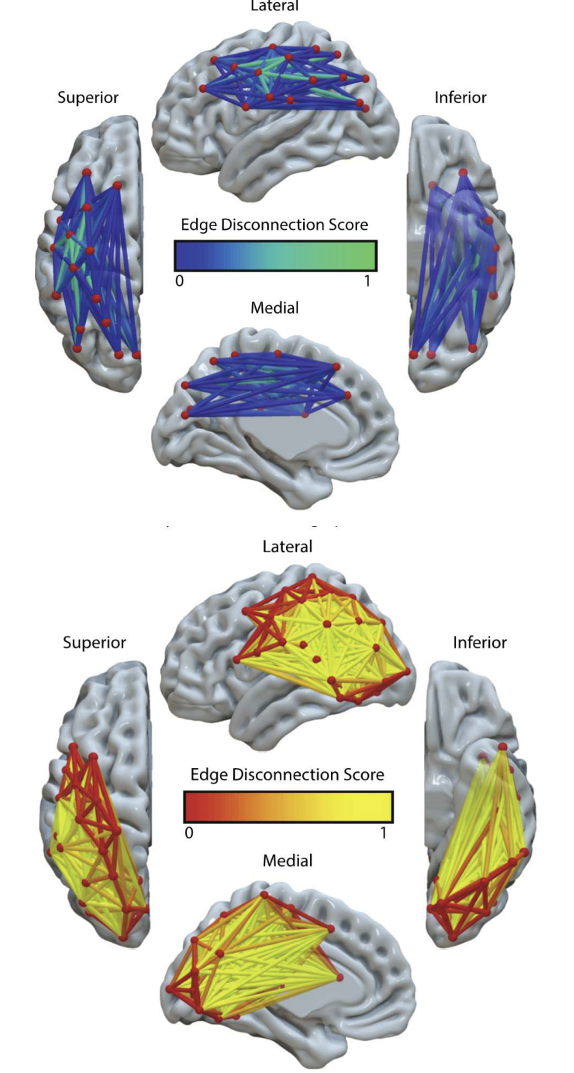
A new way to study limb apraxia
In this study, we developed a new statistical approach to better understand limb apraxia—a disorder that makes it hard for people to perform skilled movements, like imitating gestures or pretending to use tools, even though their muscles work fine. By applying our method to stroke patients with small, focal brain injuries, we were able to identify two distinct subtypes of apraxia. One patient had trouble imitating meaningless gestures, and another struggled with pantomiming tool use. We found that these differences mapped onto different patterns of brain disconnection: fronto-parietal pathways for gesture imitation, and temporo-parietal pathways for tool use. Our findings show how disruptions in specific brain networks can lead to different types of movement difficulties—and demonstrate the power of single-case analyses in uncovering these patterns.
Publication here.
Code here.
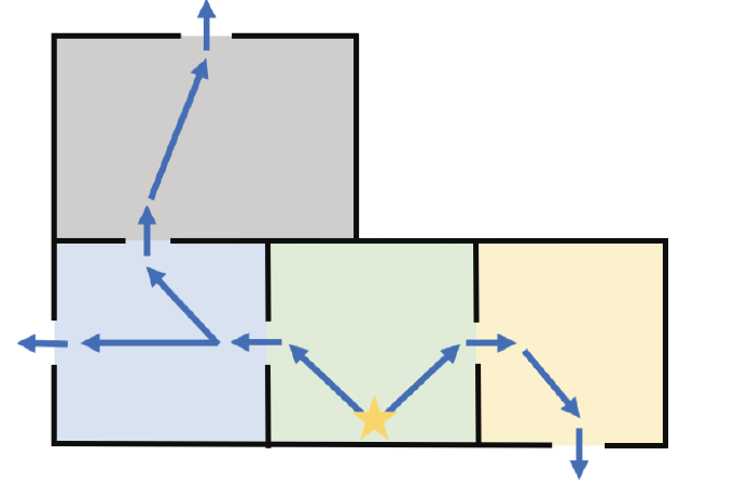
How we remember spaces we can’t see
When navigating the world, we often rely on memory to know what’s behind a closed door. This study (conducted while I was a research specialist at the Epstein Lab at UPenn) used virtual reality and brain imaging to explore how people mentally connect the spaces they see with those they’ve previously explored but can’t currently view. Participants learned the layouts of virtual environments, then recalled object locations during fMRI scanning. The results showed that brain regions like the retrosplenial cortex (RSC) help us remember what lies beyond our immediate surroundings. Interestingly, while the brain distinguished between spaces inside a room and those beyond a doorway, it didn’t seem to automatically encode how different those hidden spaces are—like a tiny closet versus a wide-open outdoors.
See a poster about this project here.
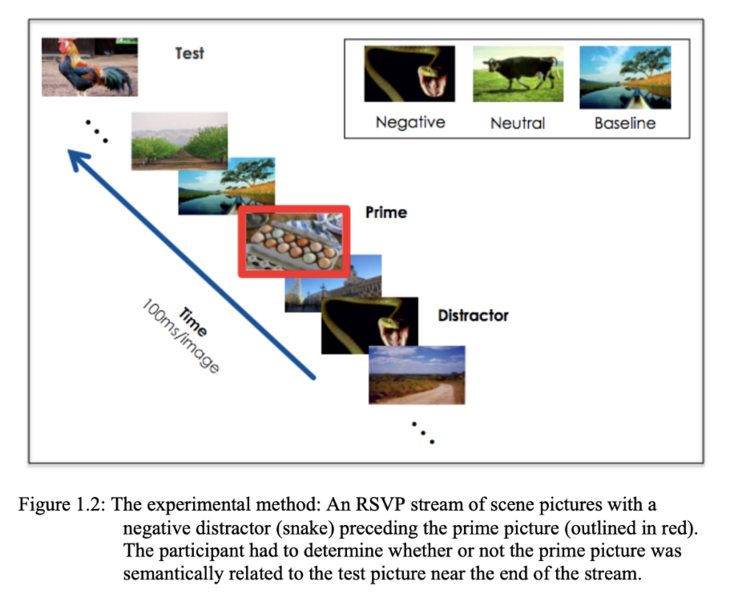
How scary images hijack our brain’s processing
Have you ever been so startled by a disturbing image that you missed something important right afterward? This study explored exactly that. Using rapid streams of images and brainwave recordings, we tested whether scary or upsetting pictures momentarily shut down the brain’s ability to understand what comes next. Our goal was to see if emotional distractions block only awareness, or if they actually interrupt the brain's early processing of meaning itself.
See my senior thesis here.